Skip to content

Table of Contents
Get your clients to move beyond the repetitive relationship dynamics, assumptions, miscommunications, and verbal sparring that keep them stuck in incongruent expression and strained attachment rhythms.
Couples often get hijacked in relationships by old body memories and dysregulated nervous systems. Through the sensory motor system in the brain and nervous system, we create embodied simulations, which become internal representations of a partner. We then project our own meaning and interpretation onto those representations.
When a partner’s expression feels familiar from an old, painful situation, clients may interpret the present moment through that old filter instead of checking their assumptions against their partner’s reality.At Embodied Relationships Training Center, finding a way to bypass those assumptions while engaging the deeper brain structures involved in embodied simulation helps clients move out of rigid, disembodied, and habitual patterns. Intentional movement and a somatic creative process can increase awareness, build ownership, and support new ways of relating that feel more internally congruent and open to connection.
How does Somatic Sculpturing help couples?
Somatic Sculpturing is a somatic-concentric sex therapy practice that helps couples bring repetitive relationship dynamics into 3D space through embodied movement, awareness, and consent-based exploration. It supports clients in noticing assumptions, body memories, defenses, and relational patterns so they can better understand their own experience, their impact on each other, and what is needed to feel safe enough for more present connection.
What Is Somatic Sculpturing?
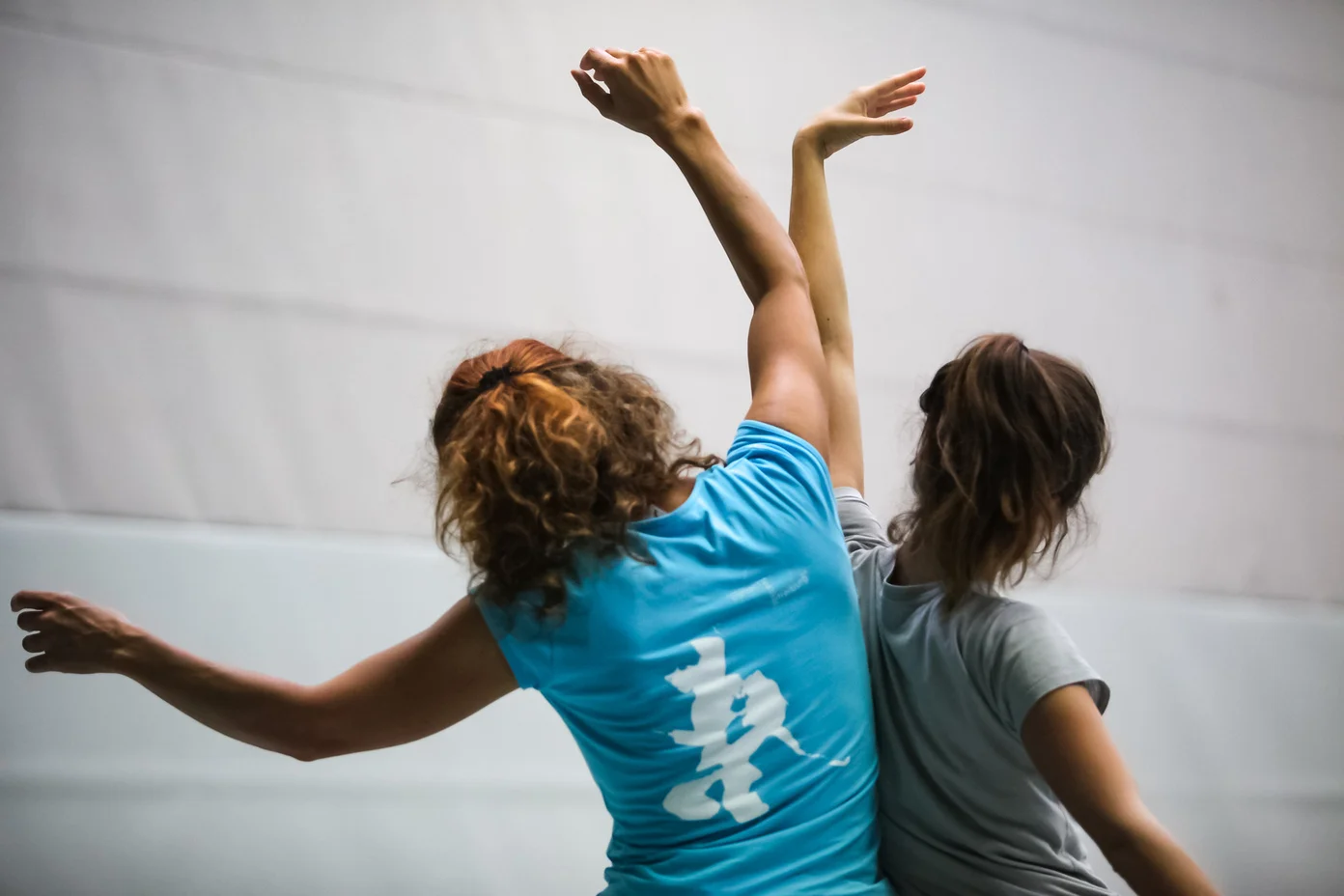
Somatic Sculpturing brings the essence of a couple’s dynamic into 3D space. This allows clients to more clearly understand their own experience, their impact on each other, and the need underneath their defenses.
This experiential intervention allows the somatic clinician to slow the pace of awareness, support a witness quality of attention instead of a watching quality of attention, and use intentional movement to reveal underlying motivations and meaning.
As clients create a whole-body sculpture of their relationship dynamic, the clinician explores body position, proximity, shaping, posture, breath quality, gaze, and other somatic dimensions. Movement fundamentals are used to help clients express their experience more clearly.
How The Practice Supports Present-Moment Awareness
As the couple begins to follow movement impulses with embodied consent, the somatic clinician creates a space of curiosity and supports clients in expanding their internal awareness.
I may ask questions such as:
- “Does this feel familiar?”
- “What is the next movement impulse?”
- “What do you notice happens as your partner expresses in that way?”
These questions help slow down the automatic relational pattern and allow each partner to notice what is happening in the body, in the space between them, and in their partner’s response.
Working With Pre-Effort Expression
In Somatic Sculpturing, our team explores pre-effort expression from the Dance/Movement Therapy body observation and assessment model. This movement profile often appears when a client is learning something new or defending against something uncomfortable.
When clients do not feel safe enough, pre-effort movement may show up as body armoring, rigidity, or unyielding movement qualities. This becomes an important place to explore what they need in order to soften into the moment and shift toward curiosity.
They may need to step back and create more space. They may need more breath support to stay connected with frustration, grief, or tears. The goal is not to force connection. The goal is to understand what is needed for connection to feel more possible.
Moving Toward Full-Effort Expression
Once clients feel safe enough, the pre-effort space can shift into a learning mind. There may still be uncertainty, anxiety, and tension, but there is enough space to stay curious and explore.
From here, the somatic clinician supports fuller expression by helping clients clarify movement with breath support, sequence movement from an impulse, use spatial intent, and oscillate between tracking themselves and tracking their partner.
Full-effort expression is where the body becomes more coordinated, confident, and congruent. This is embodiment: feeling safe enough to express on the outside what is felt on the inside.
Why Safety Comes Before Connection
During the sculpturing process, the somatic clinician makes note of important gestures, movement phrases, and verbal statements. These can be revisited later, especially when a partner is more receptive to receiving the deeper meaning behind the movement or statement.
It is always important to support the no, the hesitance, or the resistance first. The purpose is not to push clients into connection before it feels genuine. The purpose is to make the underlying dynamic more visible and help the couple learn what is needed to feel safe enough in proximity to each other.
As neuroscientist Stephen Porges says, safety in proximity allows for touch, and safety in touch allows for deeper bonding and intimacy.
As I like to say, regulate early and regulate often. Connection will happen when clients feel safe enough.
Learn More About Somatic Sculpturing
If you want to learn more about Somatic Sculpturing, contact me or register for a training here:
Training Calendar | S-CST Training workshops in Lafayette, CO