

 Skip to content
 Many couples can talk for an hour about what went wrong last night and still feel just as disconnected afterward, because the disconnect was never really about the words. Whole-body sex somatic intimacy describes a wider practice built on nervous system attunement and physical presence, not performance or genital-focused touch alone. At Embodied Relationships Training Center, somatic intimacy training in Lafayette, CO, teaches clinicians and practitioners to work with that broader model, using the body as a primary source of information rather than a supporting detail. This training welcomes two distinct audiences without diluting either experience: licensed clinicians building professional skill and individuals or couples pursuing the material for their own relationship. Sessions are structured so clinical language sits alongside plain explanation, and non-clinician participants complete the same body-based exercises without needing a professional framework to benefit.
Melissa Walker, MA, LPC, CST, R-DMT, wrote Whole-Body Sex: Somatic Sex Therapy and the Lost Language of the Erotic Body, which won the 2023 AASECT Book Award for General Audience. She built the training that accompanies the book after developing the Somatic-Concentric Sex Therapy (S-CST) model at Naropa University in nearby Boulder. Anna Mayer, MA, LPC, R-DMT, co-teaches the applied training sessions, bringing ten years of hands-on experience translating the book’s concepts into clinical technique.
Clinicians already familiar with somatic sex therapy training from other programs often find this course fills in the intimacy-specific pieces that broader curricula tend to skip. Clinicians traveling the US-36 corridor from Boulder, Denver, or Louisville can complete this training at the Lafayette studio in a single weekend. Colorado licensees can apply hours toward continuing education through the state’s Department of Regulatory Agencies, the same body overseeing LPC, LMFT, and LCSW credentials statewide.
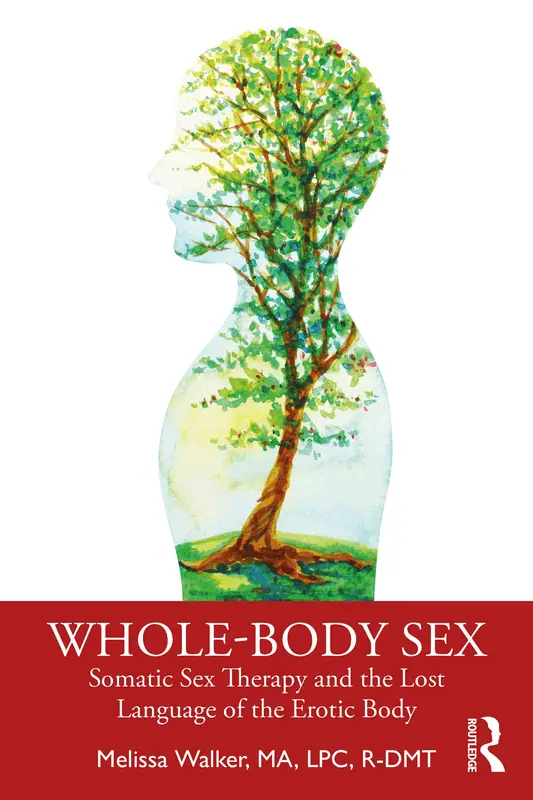
Whole-body sex is a clinical framework that treats full-body nervous system attunement, not genital performance, as the center of intimate connection. Melissa Walker developed this framework by integrating sex therapy, dance and movement therapy, and somatic psychotherapy into a single practice she now teaches through this training. The approach reframes touch, breath, and posture as primary clinical data, on par with anything a client says out loud. This whole-body sex somatic intimacy training for clinicians translates the book into a repeatable clinical curriculum, not just a reading list, so trainees leave with technique rather than only concepts. Readers who want the full theoretical grounding before enrolling can start with the Whole-Body Sex book, which this training expands into hands-on clinical practice.
Ready to see the curriculum in detail? See the Full Training Curriculum
Cognitive, top-down approaches ask clients to think their way into better intimacy, which rarely works when the block itself lives below conscious thought. Trainees learn to guide clients through body scans, breath tracking, and movement exercises that build erotic embodiment gradually rather than all at once. One foundational exercise has clients map where in the body they notice pleasure, tension, or numbness before any verbal processing begins. This often surfaces material a purely talk-based session would miss entirely. A client might spend months describing low desire in purely relational terms. A body scan can then reveal the sensation shuts off at a specific point in their torso every time. That detail gives the clinician something concrete to work with rather than an abstract complaint.
A few of the core exercises trainees practice:
Nervous system regulation determines whether intimacy feels safe or threatening long before either partner consciously decides how they feel in the moment. Trainees learn to recognize when a client’s body shifts into protective activation during a session and how to slow the pace until regulation returns before continuing. This skill transfers directly into client work, since a dysregulated nervous system cannot process intimacy exercises no matter how clearly they are explained verbally. This reflects body-centered intimacy and attachment training in practice, explaining why nervous system work sits at the center of the curriculum rather than as a side topic.
A client’s attachment history often shows up first in the body, through guarding or over-accommodation, well before it surfaces in what they say about their relationship. A client who intellectually wants closeness but flinches at sustained eye contact is showing the clinician exactly where the work needs to start. That signal matters whether or not the client can name it themselves.
Clinicians bring this training directly into private practice work with clients navigating intimacy blockages, performance anxiety, or the aftermath of sexual trauma. Many report that the training changes how they open a session, not just what they do once a client is already talking. They now notice body language while the intake conversation is still happening. A therapist trained in body-based intimacy education can track a client’s non-verbal cues in real time, rather than relying only on what the client reports after the fact. This distinction matters most in early sessions, when a client’s verbal account and their actual body language often tell two different stories. This shifts treatment from managing a client’s story about their body to working with the body’s actual signals in real time. This applies most directly to somatic relationship training for clinicians who work primarily with couples rather than individuals.
A couple’s dynamic is visible in the room in ways individual reports cannot fully capture. Clinicians who prefer hands-on learning over lecture-only formats can join experiential somatic intimacy workshops in Lafayette, CO, scheduled throughout the year. These sessions run as full experiential weekends rather than seated lectures, since the material itself does not transfer through explanation alone. Clinicians without prior coursework often pair this training with the Somatic-Concentric Sex Therapy Foundation module to build a complete clinical base. Current cohort dates for both trainings are listed together on the Therapist Training Portal, so clinicians can plan a single trip to Lafayette around either or both.
Clinicians frequently report that the sexual trauma applications carry the steepest learning curve, since consent-based touch work requires more supervised practice than observation alone. Trainees rehearse these interventions with a partner under faculty guidance before ever attempting them with a client, the same standard applied across every module in this curriculum. Faculty observe every rehearsal directly rather than checking in only at the end of a module, so a trainee’s technique gets corrected in the moment.
Clinicians who complete this training describe a measurable shift in how quickly clients move past intimacy plateaus that talk therapy alone had not resolved. The shift tends to show up within the first few sessions after training, not months later. Clinicians can immediately name what they are noticing in the room, rather than waiting for a client to volunteer it verbally.
Susy Potter, LMHC, BC-DMT, said the most valuable part was learning a whole-person, socioculturally informed approach to sexuality that she now uses daily. Dr. Teresa Johnson, a licensed psychologist and AASECT-certified sex therapist, credited Melissa Walker with the ability to weave clinical strategy with embodied practice. She said that combination made the training genuinely usable, not just theoretically interesting. Both clinicians noted that the shift showed up in their own bodies during the training itself, before they ever brought the material to a client. Several participants describe that moment as what convinces skeptics the work is real rather than conceptual.
Ready to bring these modalities to your practice? Apply for an upcoming cohort in Lafayette, CO
All in-person workshops and intensives take place at the Embodied Relationships Training Center’s studio, 308 East Simpson Street in Lafayette, Colorado. The location serves practitioners across Boulder, Denver, and the broader Front Range.
Yes, cohorts held in Lafayette offer approved continuing education units for Colorado LPCs, LMFTs, LCSWs, and certified sex therapy candidates. Hours are documented after each session for submission to the licensing board.
Whole-body sex is an expanded approach to intimacy that shifts focus from performance and genital touch toward full-body nervous system attunement and sensory awareness. The concept comes from Melissa Walker’s award-winning book of the same name and forms the theoretical foundation for this training.
Training gives clinicians practical, body-centered tools to help clients move past intimacy blockages, track non-verbal relational cues, and resolve stored sexual trauma. These tools deepen relational connection in ways that purely verbal approaches often cannot reach on their own.
Practitioners can view upcoming program schedules and foundational prerequisites, then submit an enrollment application through the training portal. Applicants can also reach the Lafayette, CO, center directly with enrollment questions before applying.
A single weekend in Lafayette gives clinicians enough to start using these tools the following week, though most build deeper fluency by continuing into advanced coursework. Somatic Intimacy Training in Lafayette, CO, works for practitioners at any stage, from graduate students exploring the field to licensed therapists refining decades of practice. It works equally well for couples or individuals who came to the material through the book rather than through a clinical license. The training does not assume prior somatic experience in either direction, so no one arrives underprepared for the format. Faculty adjust pacing within the room once they see who has shown up, rather than running every cohort through an identical script regardless of the group’s starting point.
View training schedules or visit our Contact/Application Page to find the entry point that fits.